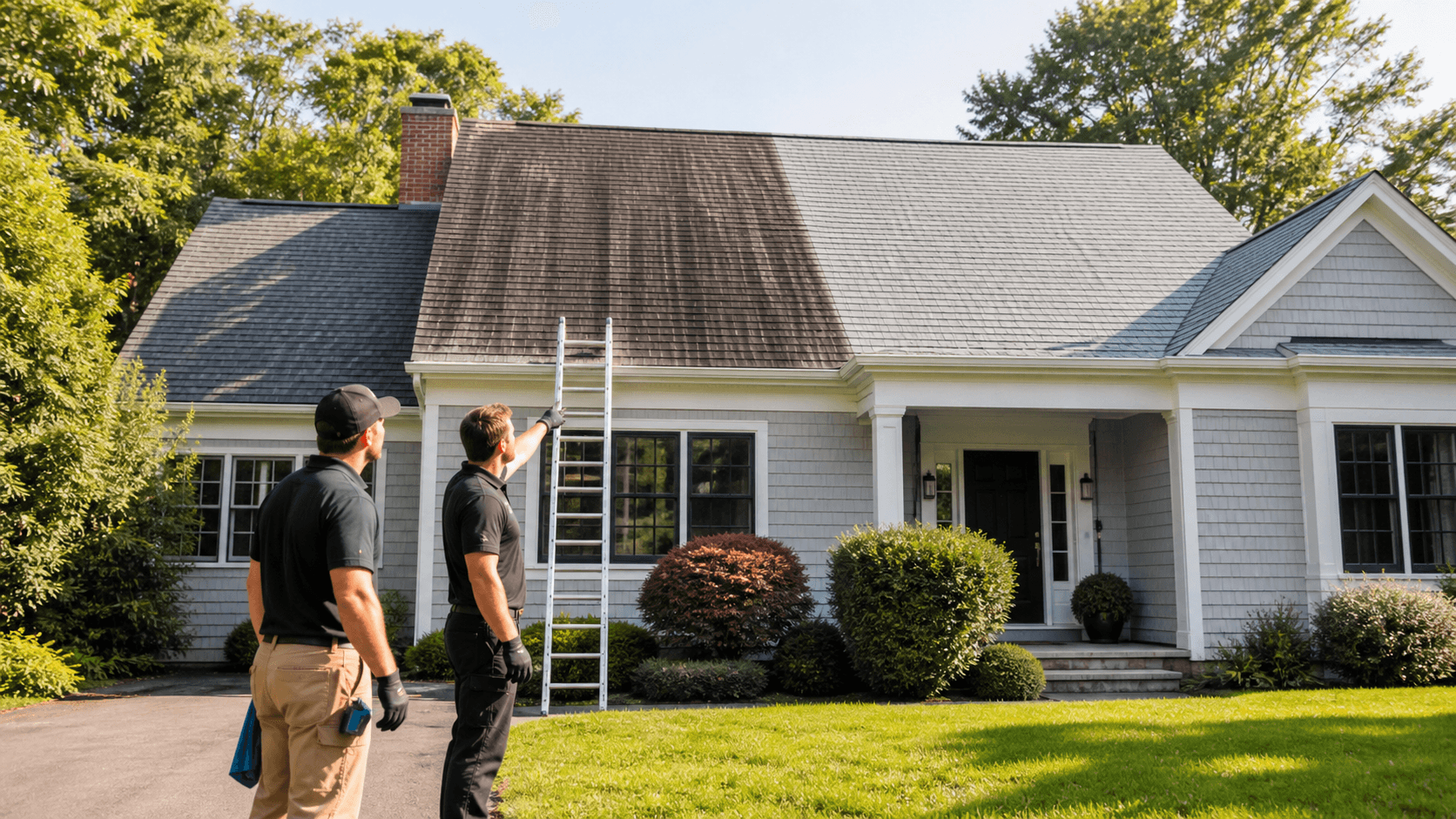
Black streaks on a roof are common on homes throughout Windsor-Essex, and they do not automatically mean your roof needs to be replaced. You may notice them from the street, after clearing fall leaves, or while looking at your gutters. Although the staining can be frustrating, it is often a surface issue that can be assessed without jumping to the worst conclusion.
Still, dark marks are worth a closer look. They can raise useful questions about moisture, shade, debris, drainage, and the overall condition of your shingles. We help homeowners understand the difference between staining that may respond to roof cleaning and signs that should be reviewed by a roofing professional first.
Black Streaks Often Point to Algae Growth
Many long, uneven black streaks on asphalt shingles are linked to algae growth, often called Gloeocapsa magma. This airborne microorganism can settle on a roof over time and leave behind dark staining as it spreads. From the ground, it may look like dirt or soot, especially when the streaks run down from the upper part of the roof.
Conditions around Windsor and Essex County can make this staining more noticeable. Humid weather, shaded roof areas, mature trees, and debris that stays damp can all create a friendlier setting for organic growth. Roof sections facing away from the strongest sun often dry more slowly, which can make streaking stand out sooner.
Not every dark roof mark is algae, though. During an assessment, we look at the pattern and condition of the roof because several issues can have a similar appearance:
- Moss or lichen attached to the shingle surface
- Leaf stains and dirt collecting in roof valleys
- Organic debris holding moisture near roof edges
- Wear, fading, or granule loss on older shingles
A proper look matters because each of these conditions may need a different approach. Treating every dark area as simple algae staining can overlook a roof that has age-related wear or damage.
Roof Cleaning Restores Appearance Without Harsh Washing
Professional roof cleaning should always suit the material and current condition of the roof. For many asphalt shingle roofs, we use a soft washing approach that relies on a controlled cleaning solution and low pressure rather than aggressive washing. The goal is to address the organic staining while treating the roof surface with care.
High-pressure washing is not appropriate for many shingle roofs. Strong pressure can disturb the protective granules on shingles, push water into areas where it should not go, and place added stress on materials that are already weathered. A roof may look tough from the ground, but shingles, flashing, edges, and roof penetrations all need careful handling.
Results can vary, and we set expectations accordingly. Roof cleaning can reduce or remove algae staining and make the roof look much cleaner, but the final outcome depends on the source of the marks, the roof's age, existing damage, and the roofing material. In some cases, treated areas may continue to improve as weather naturally rinses away remaining residue.
Some Roof Marks Need More Than Cleaning
Surface staining is one thing. Material damage is another. Before recommending roof cleaning, we encourage homeowners to pay attention to signs that may point to a roofing concern instead of, or in addition to, algae growth.
From the ground or through a safe professional assessment, concerns may include:
- Missing, curled, cracked, or lifted shingles
- Bare spots or noticeable loose granules
- Damaged flashing around vents, chimneys, or roof edges
- Active leaks, water marks indoors, or soft-looking roof areas
Moss and lichen also deserve a careful review. Unlike algae staining, these growths can attach more firmly to the roof surface and hold moisture against it. Cleaning may still be appropriate in some situations, but the shingle condition should guide the method. A roof with brittle, damaged, or failing shingles may need a roofer's assessment before any exterior cleaning is considered.
Roof cleaning is not a replacement for repair or replacement when a roof has active damage or is near the end of its service life. We believe the right answer should protect your property, not simply improve its appearance for the short term.
Fall Roof Care Supports a Cleaner Home
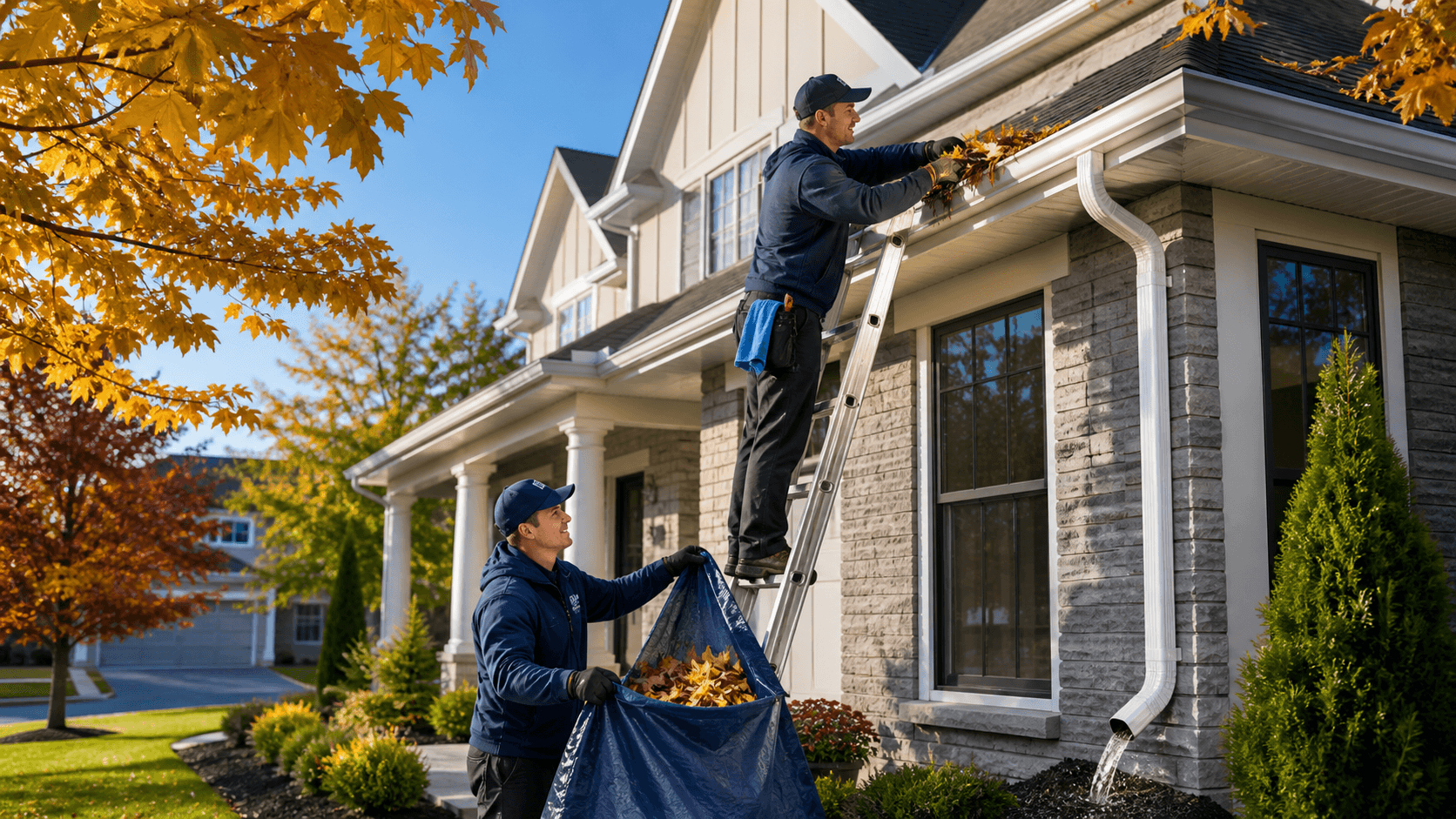
Autumn is a useful time to notice what is happening on your roof. As leaves gather in gutters, roof valleys, and around vents, they can trap moisture and make dark staining harder to assess. Debris may also slow drainage, leaving certain roof areas damp longer after rain.
Rather than climbing onto the roof, we recommend looking from the ground or arranging a safe assessment. Watch for patterns that can point to a moisture or maintenance issue, such as:
- Dark streaks beneath shaded sections of the roof
- Leaves collecting in valleys or behind roof features
- Gutters that appear blocked or overflow during rain
- Branches hanging close to the roof surface
Roof cleaning works best as part of broader exterior care. Keeping gutters clear, maintaining drainage paths, and addressing overhanging branches where appropriate can help reduce the damp, debris-filled conditions that support recurring organic buildup. These steps also make it easier to see the true condition of your shingles.
Get Clear Answers About Your Roof Streaks
Dark roof streaks are often related to algae, but the appearance alone does not tell the whole story. We assess the staining alongside the roof material, its age, visible wear, and any signs of moisture concerns so you can make an informed decision about roof cleaning.
A calm, material-appropriate approach helps protect both the look of your home and the roof itself. When black streaks are examined properly, it becomes much easier to separate a cleanable surface issue from a problem that needs roofing attention.
Protect Your Roof With the Right Care
Certified Softwash Solutions provides material-appropriate roof cleaning for Windsor homeowners who want a careful, informed solution. We assess the condition of the surface and use methods suited to the roof material. If you would like to discuss your roof's staining or request an assessment, contact us today.